Bringing together research, professional expertise and lived experience to explore what works and improve outcomes for children and families.
Alongside publishing our own practice-based evidence, we work in partnership with universities, schools, families and professionals to strengthen the evidence base for feeding development, Paediatric Feeding Disorders (PFD), and inclusive food based education and learning.
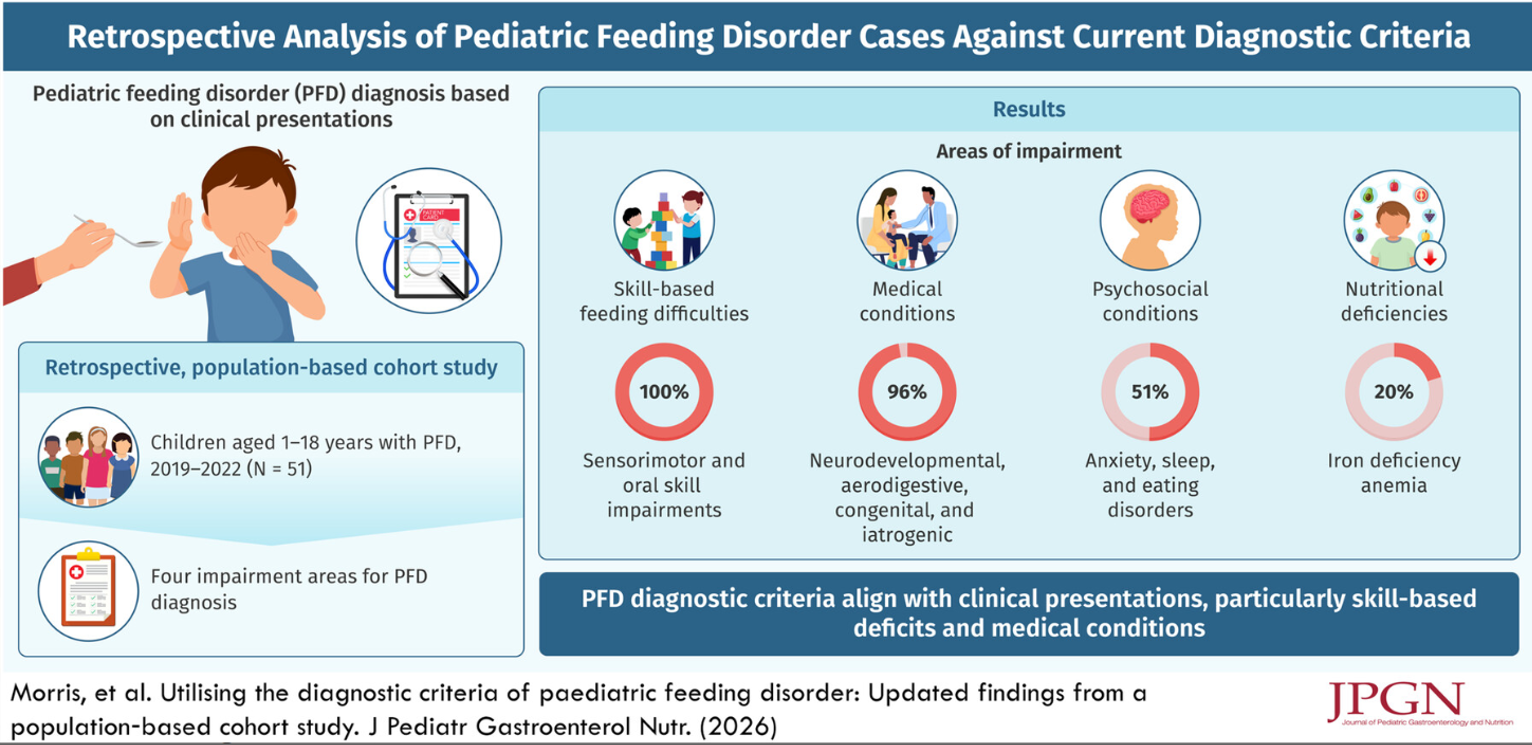
Paediatric Feeding Disorder (PFD) is often more complex than it first appears. This study provides new evidence about the conditions that commonly occur alongside PFD and the role of feeding skill development in assessment and diagnosis.
Key findings:
Morris NR, Daw H, Bates L, Horniblow RD. Utilising the diagnostic criteria of paediatric feeding disorder: updated findings from a population-based cohort study. J Pediatr Gastroenterol Nutr. 2026; 82: 33-41.
More than 100 professionals, researchers, families, and organisations worked together across an eight-month process to develop a shared vision for improving support for children with PFD.
There was strong agreement that children with feeding difficulties need:
Presented at the EACD Conference 2026 in Dublin, the outcome was a national Position Paper and recommendations to support wider recognition of PFD and improve care for children and families.
In partnership with researchers at University College London (UCL), we are conducting two practice-based research projects examining outcomes from a specialist family-centred transdisciplinary feeding service.
These studies explore how targeted intervention can support children and young people with Paediatric Feeding Disorder across the medical, nutritional, feeding-skill and psychosocial domains.
The first study examines feeding-skill development and functional outcomes following intervention, while the second focuses on psychosocial outcomes, participation, and family-centred goal attainment.
Both studies are currently in press and contribute to the emerging evidence base for transdisciplinary approaches to PFD intervention.
The Foundation is undertaking ongoing practice-based research into the effectiveness of the Eating as Learning (EaL) Framework and Curriculum in primary special schools.
This work examines how practical, inclusive food education can support feeding development, participation, emotional regulation, self-help skills, social interaction and confidence around food. Early findings from participating schools suggest positive impacts for pupils, staff and families, alongside increased confidence among school teams supporting children with feeding differences.
We are actively seeking partnerships with schools, universities, healthcare professionals, local authorities, and families to expand the evidence base for feeding, education, and development. Through collaborative research, we aim to create practical solutions that improve outcomes for children across the UK.
If you are interested in collaborating on a research project, get in touch.
Access expert guidance and practical strategies to support children and young people.
We’re putting the finishing touches to our membership. Please check back soon.
The Foundation regularly works alongside other charities and community organisations to ensure families can access relevant support and opportunities to get involved.
Examples include:
Positive About Down Syndrome (PADS)
The Foundation worked with PADS to develop a parent webinar exploring feeding development and eating challenges experienced by some children with Down syndrome.
Autism West Midlands
Through workshops and learning events, families have been able to explore topics relating to feeding differences, participation and neurodevelopment.
Worcestershire Parent Carer Forum
Partnership work with Worcestershire Parent Carer Forum has provided opportunities to hear family perspectives, support local engagement activities and strengthen conversations around feeding development, SEND and inclusion.
Interested in becoming a partner organisation?