Lunchtime is one of the busiest parts of the school day, and for many children it is also one of the hardest. Noisy dining halls, unfamiliar food, time pressure and the expectation to “eat up” can leave some children hungry, anxious and unable to join in.
Research suggests that 4 in 5 children with SEND experience feeding difficulties. That means in almost every classroom there are children who find food-related activities difficult, often without anyone realising why.
Most Food Education Focuses on What Children Should Eat
Traditional food education teaches children about healthy eating. For many children, particularly those with SEND, neurodevelopmental differences, sensory sensitivities or medical needs, the challenge is not understanding healthy eating messages. The challenge is learning how to eat, take part and build positive experiences around food.
The Eating as Learning Curriculum treats food as a developmental learning experience rather than a behaviour to be corrected. Children are supported to explore food through their senses, build confidence and curiosity, develop independence and learn at their own pace.
Why Mealtimes Belong in the Curriculum
Eating is a social, educational and developmental activity. Children take part in food-related experiences every day through lunchtimes, snack time, cooking lessons, celebrations, trips and friendships. When a child cannot take part, they can miss out on far more than a meal.
Bringing mealtimes into the curriculum means:
- Feeding skills are taught and practised, just like reading or writing
- Children who find eating hard are included rather than left out
- Staff have a shared language and approach across the whole setting
- Families and schools can work together on the same goals
Practical Ideas for Schools and Settings
- Make it about exploring, not eating. Looking at, touching, smelling and preparing food are all valid steps in learning to eat.
- Remove the pressure. Avoid rewards or praise tied to clearing a plate or trying a bite. Calm, positive experiences build confidence over time.
- Think about the environment. Noise, smells, queues and bright lighting can overwhelm some children. A quieter space or a predictable routine can help them settle.
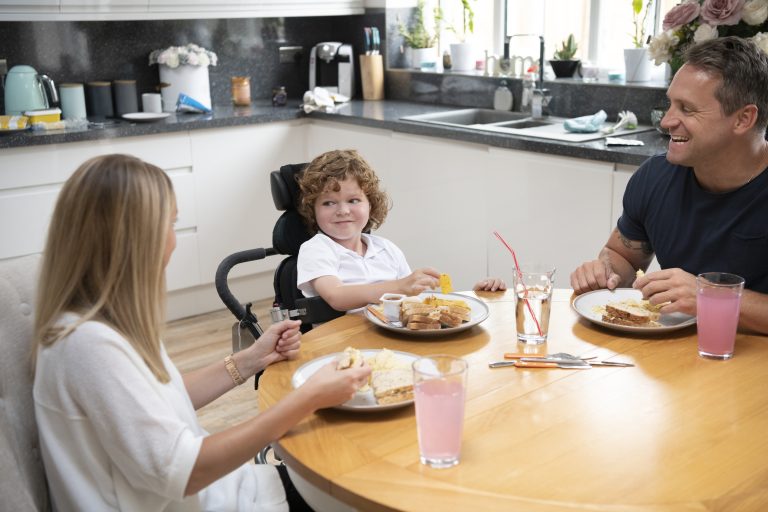
- Check seating and posture. Children eat more comfortably when their feet are supported and they feel stable at the table.
- Allow familiar foods. A safe food from home can help a child feel secure enough to take part.
- Build food into lessons. Science, maths, art and literacy can all include sensory food activities that build confidence away from the pressure of lunchtime.
- Talk to families. Parents and carers often know exactly what helps their child, and what makes things harder.
The Eating as Learning Curriculum
The Eating as Learning Curriculum is an evidence-informed programme developed by a multidisciplinary team of feeding specialists, drawing on speech and language therapy, occupational therapy and nutrition. In 2025-26, 20 schools were implementing the curriculum, with around 2,000 children benefiting.
Settings that complete the training can join our Schools and Community membership, with ongoing support for implementation across the whole organisation, and communities for Early Years, Primary and Secondary/FE settings.
To find out how the curriculum could work in your school, nursery or setting, visit our For Educational & Community Settings page or get in touch with our team.